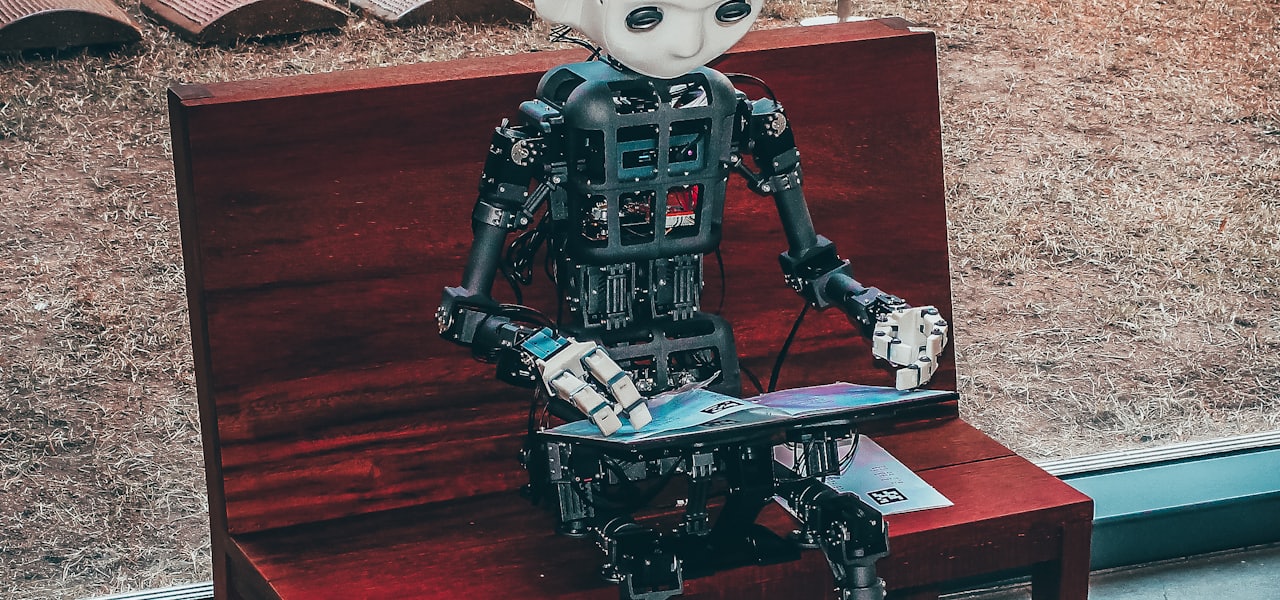
The interaction of artificial intelligence and copyright law has become one of the most contentious tech policy debates in the United Kingdom, centering on whether AI developers should be permitted to train their models on copyrighted material without explicit consent or remuneration. This debate has exposed a deep fracture between the creative industries, which seek to protect their intellectual property from unauthorised commercial exploitation, and tech companies. The academic and library sectors are also impacted, and argue that overly restrictive copyright laws hinder scientific research and the UK's sovereign AI capabilities. In 2024, the UK government proposed a broad text and data mining (TDM) exception to copyright that would have allowed AI companies to use publicly available copyrighted material for training, offering creators only an "opt-out" mechanism, similar to the exception introduced in Europe. This proposal faced intense opposition from across the creative sector. Trade unions representing writers, musicians, performers, and journalists argued that such an exception would effectively expropriate their members' work for the commercial benefit of tech giants. A report from the House of Lords Communications and Digital Committee, warned that generative AI posed a "clear and present danger" to the £124 billion creative economy. The government abandoned the opt-out model in March 2026, opting instead to build a stronger evidence base before pursuing any copyright reform. Conversely, the academic and library sectors have raised significant concerns that the UK's current TDM exception, which is strictly limited to non-commercial research, is too narrow. Universities and research libraries occupy a dual role as both creators of vast datasets and beneficiaries of TDM exceptions. They argue that the current legal framework restricts their ability to computationally analyse the very research they produce, thereby hobbling the UK's "AI for Science" strategy. Advocacy groups have highlighted a "triple payment" problem, wherein publicly funded research is handed over to publishers, who then charge universities substantial subscription fees and demand additional payments for specific TDM licences. This tension is further complicated by the commercial practices of major academic publishers. While publishers often restrict universities from using subscribed databases for AI training, they have simultaneously entered into lucrative, multi-million-dollar licensing agreements to sell access to this academic content to commercial AI developers. Furthermore, academics have accused publishers of actively steering authors away from permissive open-access licences towards more restrictive variants. By doing so, publishers retain the exclusive commercial rights necessary to strike these AI training deals, often without consulting the original authors or offering them any additional remuneration. This dynamic has not only reopened debates within the Open Access movement but has also created complex legal scenarios where publishers, rather than authors, control the terms of copyright litigation against major tech companies. == Training on copyrighted material == The question of whether AI developers should be permitted to train their models on copyrighted material without payment or consent has been one of the most contentious policy debates in the UK AI landscape. In 2024, the then-Conservative government proposed a broad text and data mining (TDM) exception that would have allowed AI companies to use any publicly available copyrighted material for training purposes, with creators able only to "opt out" of having their work used. This proposal provoked intense opposition from writers, musicians, visual artists, publishers, and broadcasters, who argued it would effectively expropriate their intellectual property for the commercial benefit of AI companies. The debate over text and data mining exceptions extends significantly beyond generative AI and the creative industries, implicating a wide range of scientific, industrial, and academic research applications. TDM is a foundational process for analysing large datasets to identify patterns, trends, and correlations, which is heavily utilised in fields such as medical research, climate modelling, and financial services. In the scientific and academic sectors, researchers rely on TDM to process vast amounts of published literature. For example, in biomedical research, TDM is used to accelerate drug discovery, identify new uses for existing medicines, and extract insights from clinical notes and genomic datasets. However, the application of traditional copyright frameworks to scientific literature has been criticised by academics. Researchers argue that scientific writing is intended to convey factual, verifiable information rather than creative originality, and that copyright restrictions on TDM hinder reproducibility, validation, and the advancement of science. The current UK copyright exception for TDM (Section 29A of the Copyright, Designs and Patents Act 1988) is limited strictly to non-commercial research, which creates barriers for public-private research partnerships and commercial scientific development. Beyond academia, non-generative AI and TDM are critical to various industrial and commercial operations. In the financial services sector, TDM is employed to monitor transactions, detect fraud, and analyse market feeds. Other non-generative applications include search engine indexing, plagiarism detection software, and media monitoring. A 2026 report by Public First estimated that 19% of UK businesses use specialised TDM tools, and that a restrictive copyright regime requiring licenses for all copyrighted content could cost the UK economy £220 billion in lost AI-driven GDP growth by 2035 compared to a broad commercial TDM exemption. Industry advocates argue that the lack of a commercial TDM exception in the UK creates legal uncertainty that stifles innovation across these broader, non-generative applications of data analysis. === Tech and AI industry positions === The technology and artificial intelligence industries lobbied for a broad text and data mining (TDM) exception to UK copyright law, arguing that such an exception is essential for the UK to remain globally competitive in AI development. Industry bodies such as techUK have argued that without a TDM exception, the UK risks becoming an "AI taker rather than an AI maker," as developers will relocate training operations to jurisdictions with more permissive copyright regimes, such as the United States, Japan, Singapore, and the European Union. During the UK government's 2024–2025 consultation on copyright and AI, major AI developers and trade associations strongly supported "Option 2" (a broad TDM exception) or "Option 3" (a TDM exception with an opt-out mechanism). OpenAI stated in its consultation response that a broad TDM exception is "necessary to drive AI innovation and investment in the UK," arguing that developers should be permitted to train models on lawfully accessed copies without further distribution. The Computer and Communications Industry Association (CCIA) similarly argued that restricting TDM to non-commercial development would undermine the government's ambitions for the UK tech sector and frustrate partnerships between commercial entities and research institutions. Tech industry advocates have also highlighted the economic implications of copyright policy. According to analysis by the think tank UK Day One, adopting an overly restrictive licensing-only approach could result in the UK economy losing up to £182 billion over 20 years, whereas a broad TDM exception could generate a positive impact of £131.61 billion over the same period. Following the government's March 2026 decision to drop plans for a TDM exception in favour of a market-led licensing approach, techUK's Deputy CEO Antony Walker criticised the move, stating that "copyright material cannot be used for AI development and training without permission" under the current framework, which he argued would push AI model training to the US. === Creative sector and political opposition to text and data mining === In March 2026, the House of Lords Communications and Digital Committee published a report, AI, Copyright and the Creative Industries, which concluded that the creative industries face "a clear and present danger from generative AI" and that it would be "a very poor bet" for the government to weaken copyright protections to attract AI investment. The Committee noted that the creative industries contributed £124 billion to the UK economy in 2023 and employed 2.4 million people, compared to the AI sector's £12 billion GVA and 86,000 employees in 2024. The Committee called on the government to develop a "licensing-first" regime underpinned by mandatory transparency requirements, and to rule out any new commercial TDM exception with an opt-out model. Tra
Curvelet
Curvelets are a non-adaptive technique for multi-scale object representation. Being an extension of the wavelet concept, they are becoming popular in similar fields, namely in image processing and scientific computing. Wavelets generalize the Fourier transform by using a basis that represents both location and spatial frequency. For 2D or 3D signals, directional wavelet transforms go further, by using basis functions that are also localized in orientation. A curvelet transform differs from other directional wavelet transforms in that the degree of localisation in orientation varies with scale. In particular, fine-scale basis functions are long ridges; the shape of the basis functions at scale j is 2 − j {\displaystyle 2^{-j}} by 2 − j / 2 {\displaystyle 2^{-j/2}} so the fine-scale bases are skinny ridges with a precisely determined orientation. Curvelets are an appropriate basis for representing images (or other functions) which are smooth apart from singularities along smooth curves, where the curves have bounded curvature, i.e. where objects in the image have a minimum length scale. This property holds for cartoons, geometrical diagrams, and text. As one zooms in on such images, the edges they contain appear increasingly straight. Curvelets take advantage of this property, by defining the higher resolution curvelets to be more elongated than the lower resolution curvelets. However, natural images (photographs) do not have this property; they have detail at every scale. Therefore, for natural images, it is preferable to use some sort of directional wavelet transform whose wavelets have the same aspect ratio at every scale. When the image is of the right type, curvelets provide a representation that is considerably sparser than other wavelet transforms. This can be quantified by considering the best approximation of a geometrical test image that can be represented using only n {\displaystyle n} wavelets, and analysing the approximation error as a function of n {\displaystyle n} . For a Fourier transform, the squared error decreases only as O ( 1 / n ) {\displaystyle O(1/{\sqrt {n}})} . For a wide variety of wavelet transforms, including both directional and non-directional variants, the squared error decreases as O ( 1 / n ) {\displaystyle O(1/n)} . The extra assumption underlying the curvelet transform allows it to achieve O ( ( log n ) 3 / n 2 ) {\displaystyle O({(\log n)}^{3}/{n^{2}})} . Efficient numerical algorithms exist for computing the curvelet transform of discrete data. The computational cost of the discrete curvelet transforms proposed by Candès et al. (Discrete curvelet transform based on unequally-spaced fast Fourier transforms and based on the wrapping of specially selected Fourier samples) is approximately 6–10 times that of an FFT, and has the same dependence of O ( n 2 log n ) {\displaystyle O(n^{2}\log n)} for an image of size n × n {\displaystyle n\times n} . == Curvelet construction == To construct a basic curvelet ϕ {\displaystyle \phi } and provide a tiling of the 2-D frequency space, two main ideas should be followed: Consider polar coordinates in frequency domain Construct curvelet elements being locally supported near wedges The number of wedges is N j = 4 ⋅ 2 ⌈ j 2 ⌉ {\displaystyle N_{j}=4\cdot 2^{\left\lceil {\frac {j}{2}}\right\rceil }} at the scale 2 − j {\displaystyle 2^{-j}} , i.e., it doubles in each second circular ring. Let ξ = ( ξ 1 , ξ 2 ) T {\displaystyle {\boldsymbol {\xi }}=\left(\xi _{1},\xi _{2}\right)^{T}} be the variable in frequency domain, and r = ξ 1 2 + ξ 2 2 , ω = arctan ξ 1 ξ 2 {\displaystyle r={\sqrt {\xi _{1}^{2}+\xi _{2}^{2}}},\omega =\arctan {\frac {\xi _{1}}{\xi _{2}}}} be the polar coordinates in the frequency domain. We use the ansatz for the dilated basic curvelets in polar coordinates: ϕ ^ j , 0 , 0 := 2 − 3 j 4 W ( 2 − j r ) V ~ N j ( ω ) , r ≥ 0 , ω ∈ [ 0 , 2 π ) , j ∈ N 0 {\displaystyle {\hat {\phi }}_{j,0,0}:=2^{\frac {-3j}{4}}W(2^{-j}r){\tilde {V}}_{N_{j}}(\omega ),r\geq 0,\omega \in [0,2\pi ),j\in N_{0}} To construct a basic curvelet with compact support near a ″basic wedge″, the two windows W {\displaystyle W} and V ~ N j {\displaystyle {\tilde {V}}_{N_{j}}} need to have compact support. Here, we can simply take W ( r ) {\displaystyle W(r)} to cover ( 0 , ∞ ) {\displaystyle (0,\infty )} with dilated curvelets and V ~ N j {\displaystyle {\tilde {V}}_{N_{j}}} such that each circular ring is covered by the translations of V ~ N j {\displaystyle {\tilde {V}}_{N_{j}}} . Then the admissibility yields ∑ j = − ∞ ∞ | W ( 2 − j r ) | 2 = 1 , r ∈ ( 0 , ∞ ) . {\displaystyle \sum _{j=-\infty }^{\infty }\left|W(2^{-j}r)\right|^{2}=1,r\in (0,\infty ).} see Window Functions for more information For tiling a circular ring into N {\displaystyle N} wedges, where N {\displaystyle N} is an arbitrary positive integer, we need a 2 π {\displaystyle 2\pi } -periodic nonnegative window V ~ N {\displaystyle {\tilde {V}}_{N}} with support inside [ − 2 π N , 2 π N ] {\displaystyle \left[{\frac {-2\pi }{N}},{\frac {2\pi }{N}}\right]} such that ∑ l = 0 N − 1 V ~ N 2 ( ω − 2 π l N ) = 1 {\displaystyle \sum _{l=0}^{N-1}{\tilde {V}}_{N}^{2}\left(\omega -{\frac {2\pi l}{N}}\right)=1} , for all ω ∈ [ 0 , 2 π ) {\displaystyle \omega \in \left[0,2\pi \right)} , V ~ N {\displaystyle {\tilde {V}}_{N}} can be simply constructed as 2 π {\displaystyle 2\pi } -periodizations of a scaled window V ( N ω 2 π ) {\displaystyle V\left({\frac {N\omega }{2\pi }}\right)} . Then, it follows that ∑ l = 0 N j − 1 | 2 3 j 4 ϕ ^ j , 0 , 0 ( r , ω − 2 π l N j ) | 2 = | W ( 2 − j r ) | 2 ∑ l = 0 N j − 1 V ~ N j 2 ( ω − 2 π l N ) = | W ( 2 − j r ) | 2 {\displaystyle \sum _{l=0}^{N_{j}-1}\left|2^{\frac {3j}{4}}{\hat {\phi }}_{j,0,0}\left(r,\omega -{\frac {2\pi l}{N_{j}}}\right)\right|^{2}=\left|W(2^{-j}r)\right|^{2}\sum _{l=0}^{N_{j}-1}{\tilde {V}}_{N_{j}}^{2}\left(\omega -{\frac {2\pi l}{N}}\right)=\left|W(2^{-j}r)\right|^{2}} For a complete covering of the frequency plane including the region around zero, we need to define a low pass element ϕ ^ − 1 := W 0 ( | ξ | ) {\displaystyle {\hat {\phi }}_{-1}:=W_{0}(\left|\xi \right|)} with W 0 2 ( r ) 2 := 1 − ∑ j = 0 ∞ W ( 2 − j r ) 2 {\displaystyle W_{0}^{2}(r)^{2}:=1-\sum _{j=0}^{\infty }W(2^{-j}r)^{2}} that is supported on the unit circle, and where we do not consider any rotation. == Applications == Image processing Seismic exploration Fluid mechanics PDEs solving Compressed sensing
Vowpal Wabbit
Vowpal Wabbit (VW) is an open-source fast online interactive machine learning system library and program developed originally at Yahoo! Research, and currently at Microsoft Research. It was started and is led by John Langford. Vowpal Wabbit's interactive learning support is particularly notable including Contextual Bandits, Active Learning, and forms of guided Reinforcement Learning. Vowpal Wabbit provides an efficient scalable out-of-core implementation with support for a number of machine learning reductions, importance weighting, and a selection of different loss functions and optimization algorithms. == Notable features == The VW program supports: Multiple supervised (and semi-supervised) learning problems: Classification (both binary and multi-class) Regression Active learning (partially labeled data) for both regression and classification Multiple learning algorithms (model-types / representations) OLS regression Matrix factorization (sparse matrix SVD) Single layer neural net (with user specified hidden layer node count) Searn (Search and Learn) Latent Dirichlet Allocation (LDA) Stagewise polynomial approximation Recommend top-K out of N One-against-all (OAA) and cost-sensitive OAA reduction for multi-class Weighted all pairs Contextual-bandit (with multiple exploration/exploitation strategies) Multiple loss functions: squared error quantile hinge logistic poisson Multiple optimization algorithms Stochastic gradient descent (SGD) BFGS Conjugate gradient Regularization (L1 norm, L2 norm, & elastic net regularization) Flexible input - input features may be: Binary Numerical Categorical (via flexible feature-naming and the hash trick) Can deal with missing values/sparse-features Other features On the fly generation of feature interactions (quadratic and cubic) On the fly generation of N-grams with optional skips (useful for word/language data-sets) Automatic test-set holdout and early termination on multiple passes bootstrapping User settable online learning progress report + auditing of the model Hyperparameter optimization == Scalability == Vowpal wabbit has been used to learn a tera-feature (1012) data-set on 1000 nodes in one hour. Its scalability is aided by several factors: Out-of-core online learning: no need to load all data into memory The hashing trick: feature identities are converted to a weight index via a hash (uses 32-bit MurmurHash3) Exploiting multi-core CPUs: parsing of input and learning are done in separate threads. Compiled C++ code
IBM Watsonx
Watsonx is a platform by IBM for building and managing artificial intelligence (AI) applications for business use. Released on May 9, 2023, the platform provides software tools and infrastructure for companies to work with both IBM's own AI models and models from third-party sources. The platform consists of three main components: watsonx.ai, a studio for training, validating, and deploying AI models; watsonx.data, a system for storing and managing data used by the models; and watsonx.governance, a toolkit to ensure AI applications are compliant with company policies and regulations. A key feature of the platform is that it can be trained on a company's private data to perform specialized tasks, a process known as fine-tuning. IBM states that this client-specific data is not used to train its own models. == History == Watsonx was introduced on May 9, 2023, at the annual IBM Think conference, as a platform that includes multiple services. Just like Watson AI computer with the similar name, Watsonx was named after Thomas J. Watson, IBM's founder and first CEO. On February 13, 2024, Anaconda partnered with IBM to embed its open-source Python packages into Watsonx. Watsonx is used at ESPN's Fantasy Football App for managing players' performance, and by Italian telecommunications company Wind Tre. It was employed to generate editorial content around nominees during the 66th Annual Grammy Awards. In 2025, Wimbledon integrated IBM watsonx generative AI into its app and website. Integrated with IBM Safer Payments, IBM watsonx has been used in banking sector fraud detection and anti-money laundering (AML) systems. == Services == === watsonx.ai === Watsonx.ai is a platform that allows AI developers to leverage a wide range of LLMs under IBM's own Granite series and others such as Facebook's LLaMA-2, free and open-source model Mistral, and many others present in the Hugging Face community. These models come pre-trained and optimized for various natural language processing (NLP) applications.The platform also allows fine-tuning with its Tuning Studio. === watsonx.data === Watsonx.data is a platform designed to assist clients in addressing issues related to data volume, complexity, cost, and governance.. The platform facilitates seamless data access, whether stored in the cloud or on-premises, through a single entry point. === watsonx.governance === Watsonx.governance is a platform that utilizes IBM's AI capabilities to implement AI lifecycle governance. This helps them manage risks and maintain compliance with evolving AI and industry regulations, while reducing AI bias through automated oversight.
Constellation model
The constellation model is a probabilistic, generative model for category-level object recognition in computer vision. Like other part-based models, the constellation model attempts to represent an object class by a set of N parts under mutual geometric constraints. Because it considers the geometric relationship between different parts, the constellation model differs significantly from appearance-only, or "bag-of-words" representation models, which explicitly disregard the location of image features. The problem of defining a generative model for object recognition is difficult. The task becomes significantly complicated by factors such as background clutter, occlusion, and variations in viewpoint, illumination, and scale. Ideally, we would like the particular representation we choose to be robust to as many of these factors as possible. In category-level recognition, the problem is even more challenging because of the fundamental problem of intra-class variation. Even if two objects belong to the same visual category, their appearances may be significantly different. However, for structured objects such as cars, bicycles, and people, separate instances of objects from the same category are subject to similar geometric constraints. For this reason, particular parts of an object such as the headlights or tires of a car still have consistent appearances and relative positions. The Constellation Model takes advantage of this fact by explicitly modeling the relative location, relative scale, and appearance of these parts for a particular object category. Model parameters are estimated using an unsupervised learning algorithm, meaning that the visual concept of an object class can be extracted from an unlabeled set of training images, even if that set contains "junk" images or instances of objects from multiple categories. It can also account for the absence of model parts due to appearance variability, occlusion, clutter, or detector error. == History == The idea for a "parts and structure" model was originally introduced by Fischler and Elschlager in 1973. This model has since been built upon and extended in many directions. The Constellation Model, as introduced by Dr. Perona and his colleagues, was a probabilistic adaptation of this approach. In the late '90s, Burl et al. revisited the Fischler and Elschlager model for the purpose of face recognition. In their work, Burl et al. used manual selection of constellation parts in training images to construct a statistical model for a set of detectors and the relative locations at which they should be applied. In 2000, Weber et al. made the significant step of training the model using a more unsupervised learning process, which precluded the necessity for tedious hand-labeling of parts. Their algorithm was particularly remarkable because it performed well even on cluttered and occluded image data. Fergus et al. then improved upon this model by making the learning step fully unsupervised, having both shape and appearance learned simultaneously, and accounting explicitly for the relative scale of parts. == The method of Weber and Welling et al. == In the first step, a standard interest point detection method, such as Harris corner detection, is used to generate interest points. Image features generated from the vicinity of these points are then clustered using k-means or another appropriate algorithm. In this process of vector quantization, one can think of the centroids of these clusters as being representative of the appearance of distinctive object parts. Appropriate feature detectors are then trained using these clusters, which can be used to obtain a set of candidate parts from images. As a result of this process, each image can now be represented as a set of parts. Each part has a type, corresponding to one of the aforementioned appearance clusters, as well as a location in the image space. === Basic generative model === Weber & Welling here introduce the concept of foreground and background. Foreground parts correspond to an instance of a target object class, whereas background parts correspond to background clutter or false detections. Let T be the number of different types of parts. The positions of all parts extracted from an image can then be represented in the following "matrix," X o = ( x 11 , x 12 , ⋯ , x 1 N 1 x 21 , x 22 , ⋯ , x 2 N 2 ⋮ x T 1 , x T 2 , ⋯ , x T N T ) {\displaystyle X^{o}={\begin{pmatrix}x_{11},x_{12},{\cdots },x_{1N_{1}}\\x_{21},x_{22},{\cdots },x_{2N_{2}}\\\vdots \\x_{T1},x_{T2},{\cdots },x_{TN_{T}}\end{pmatrix}}} where N i {\displaystyle N_{i}\,} represents the number of parts of type i ∈ { 1 , … , T } {\displaystyle i\in \{1,\dots ,T\}} observed in the image. The superscript o indicates that these positions are observable, as opposed to missing. The positions of unobserved object parts can be represented by the vector x m {\displaystyle x^{m}\,} . Suppose that the object will be composed of F {\displaystyle F\,} distinct foreground parts. For notational simplicity, we assume here that F = T {\displaystyle F=T\,} , though the model can be generalized to F > T {\displaystyle F>T\,} . A hypothesis h {\displaystyle h\,} is then defined as a set of indices, with h i = j {\displaystyle h_{i}=j\,} , indicating that point x i j {\displaystyle x_{ij}\,} is a foreground point in X o {\displaystyle X^{o}\,} . The generative probabilistic model is defined through the joint probability density p ( X o , x m , h ) {\displaystyle p(X^{o},x^{m},h)\,} . === Model details === The rest of this section summarizes the details of Weber & Welling's model for a single component model. The formulas for multiple component models are extensions of those described here. To parametrize the joint probability density, Weber & Welling introduce the auxiliary variables b {\displaystyle b\,} and n {\displaystyle n\,} , where b {\displaystyle b\,} is a binary vector encoding the presence/absence of parts in detection ( b i = 1 {\displaystyle b_{i}=1\,} if h i > 0 {\displaystyle h_{i}>0\,} , otherwise b i = 0 {\displaystyle b_{i}=0\,} ), and n {\displaystyle n\,} is a vector where n i {\displaystyle n_{i}\,} denotes the number of background candidates included in the i t h {\displaystyle i^{th}} row of X o {\displaystyle X^{o}\,} . Since b {\displaystyle b\,} and n {\displaystyle n\,} are completely determined by h {\displaystyle h\,} and the size of X o {\displaystyle X^{o}\,} , we have p ( X o , x m , h ) = p ( X o , x m , h , n , b ) {\displaystyle p(X^{o},x^{m},h)=p(X^{o},x^{m},h,n,b)\,} . By decomposition, p ( X o , x m , h , n , b ) = p ( X o , x m | h , n , b ) p ( h | n , b ) p ( n ) p ( b ) {\displaystyle p(X^{o},x^{m},h,n,b)=p(X^{o},x^{m}|h,n,b)p(h|n,b)p(n)p(b)\,} The probability density over the number of background detections can be modeled by a Poisson distribution, p ( n ) = ∏ i = 1 T 1 n i ! ( M i ) n i e − M i {\displaystyle p(n)=\prod _{i=1}^{T}{\frac {1}{n_{i}!}}(M_{i})^{n_{i}}e^{-M_{i}}} where M i {\displaystyle M_{i}\,} is the average number of background detections of type i {\displaystyle i\,} per image. Depending on the number of parts F {\displaystyle F\,} , the probability p ( b ) {\displaystyle p(b)\,} can be modeled either as an explicit table of length 2 F {\displaystyle 2^{F}\,} , or, if F {\displaystyle F\,} is large, as F {\displaystyle F\,} independent probabilities, each governing the presence of an individual part. The density p ( h | n , b ) {\displaystyle p(h|n,b)\,} is modeled by p ( h | n , b ) = { 1 ∏ f = 1 F N f b f , if h ∈ H ( b , n ) 0 , for other h {\displaystyle p(h|n,b)={\begin{cases}{\frac {1}{\textstyle \prod _{f=1}^{F}N_{f}^{b_{f}}}},&{\mbox{if }}h\in H(b,n)\\0,&{\mbox{for other }}h\end{cases}}} where H ( b , n ) {\displaystyle H(b,n)\,} denotes the set of all hypotheses consistent with b {\displaystyle b\,} and n {\displaystyle n\,} , and N f {\displaystyle N_{f}\,} denotes the total number of detections of parts of type f {\displaystyle f\,} . This expresses the fact that all consistent hypotheses, of which there are ∏ f = 1 F N f b f {\displaystyle \textstyle \prod _{f=1}^{F}N_{f}^{b_{f}}} , are equally likely in the absence of information on part locations. And finally, p ( X o , x m | h , n ) = p f g ( z ) p b g ( x b g ) {\displaystyle p(X^{o},x^{m}|h,n)=p_{fg}(z)p_{bg}(x_{bg})\,} where z = ( x o x m ) {\displaystyle z=(x^{o}x^{m})\,} are the coordinates of all foreground detections, observed and missing, and x b g {\displaystyle x_{bg}\,} represents the coordinates of the background detections. Note that foreground detections are assumed to be independent of the background. p f g ( z ) {\displaystyle p_{fg}(z)\,} is modeled as a joint Gaussian with mean μ {\displaystyle \mu \,} and covariance Σ {\displaystyle \Sigma \,} . === Classification === The ultimate objective of this model is to classify images into classes "object present" (class C 1 {\displaystyle C_{1}\,} ) and "object absent" (class C 0 {\displaystyle C_{0}\,} ) given t
Local-first software
Local-first software is a software engineering approach in which an application stores its data primarily on the user's own device rather than on remote servers. Users can read and write data without an Internet connection, and changes are synchronized across devices in the background when connectivity is available. The approach differs from conventional cloud-based applications, where the server holds the authoritative copy of user data and the client acts as a thin client. The term was coined in a 2019 paper published by researchers at Ink & Switch, an independent research lab, and presented at the Onward! conference at ACM SIGPLAN. The paper, sometimes referred to as a manifesto, was authored by Martin Kleppmann, Adam Wiggins, Peter van Hardenberg, and Mark McGranaghan. == Background == Before the widespread adoption of Internet-connected software in the 2000s, most desktop applications stored data as files on the user's local disk. Users had direct access to their files and could copy, back up, or delete them at will. The rise of software as a service (SaaS) and cloud-based applications like Google Docs shifted data storage to centralized servers. While cloud applications made real-time collaboration across devices straightforward, they introduced a dependency on the service provider: if the provider discontinued the service or experienced an outage, users could lose access to their data. A related concept, "offline-first," emerged in the early 2010s and focused on making web applications resilient to network interruptions. The local-first approach built on these earlier efforts while placing greater emphasis on long-term data ownership and end-to-end encryption. == Origins == === Ink & Switch manifesto === Ink & Switch is an industrial research lab co-founded by Adam Wiggins, who had earlier co-founded Heroku. Martin Kleppmann, an associate professor in the Department of Computer Science and Technology at the University of Cambridge, was a co-author of the 2019 paper. The manifesto proposed seven "ideals" for local-first software: Fast — Operations respond without network round-trips. Multi-device — Data synchronizes across a user's devices. Offline — Users can read and write data without a network connection. Collaboration — Multiple users can work on the same data concurrently. Longevity — Data remains accessible even if the software vendor ceases operation. Privacy — End-to-end encryption protects user data. User control — The vendor cannot restrict how users access or use their data. The paper surveyed existing approaches to data storage and collaboration — ranging from email attachments and Dropbox-style file synchronization to web applications and mobile backends — and argued that none of them satisfied all seven ideals simultaneously. === Role of CRDTs === The manifesto identified conflict-free replicated data types (CRDTs) as a promising technical foundation for local-first applications. CRDTs are data structures that allow multiple replicas to be edited independently and then merged without conflicts, a property first formalized in research by Marc Shapiro and colleagues around 2011. Kleppmann and collaborators at Ink & Switch developed Automerge, an open-source CRDT library for JSON documents, to make these algorithms available to application developers. == Adoption and community == Developer interest in the local-first approach grew after the 2019 paper spread on Hacker News and at developer conferences In August 2023, Wired published a feature article on the movement, describing it as an effort to reduce reliance on large cloud providers. The first Local-First Conf took place on 30 May 2024 in Berlin, with talks by Kleppmann and developers from companies including Linear and Anytype. The community has continued to expand, with regular "LoFi" meetups, a podcast (localfirst.fm), and a third edition of the conference planned for Berlin in July 2026. == Criticisms and limitations == Developers and commentators have pointed out practical difficulties with the local-first approach. Synchronizing data between multiple devices that may be offline for extended periods introduces complexity that cloud-based architectures avoid. Conflict resolution, even with CRDTs, can produce results that are technically consistent but semantically unexpected to users. Schema migrations across thousands of client devices running different application versions pose another difficulty that does not arise with server-side databases. Web browsers impose storage limits and may evict locally stored data. Safari, for instance, has been reported to clear IndexedDB data after seven days of inactivity on a given site, which undermines the assumption that local data is persistent. There is also disagreement within the local-first community about whether a fully decentralized architecture is required. The original manifesto described decentralization as the "logical end goal," but a number of products that identify as local-first still depend on centralized servers for authentication, backup, or synchronization. In a talk at Local-First Conf 2024, Kleppmann said the seven ideals are better understood as a "gradient" rather than a strict checklist.
Optimal discriminant analysis and classification tree analysis
Optimal Discriminant Analysis (ODA) and the related classification tree analysis (CTA) are exact statistical methods that maximize predictive accuracy. For any specific sample and exploratory or confirmatory hypothesis, optimal discriminant analysis (ODA) identifies the statistical model that yields maximum predictive accuracy, assesses the exact Type I error rate, and evaluates potential cross-generalizability. Optimal discriminant analysis may be applied to > 0 dimensions, with the one-dimensional case being referred to as UniODA and the multidimensional case being referred to as MultiODA. Optimal discriminant analysis is an alternative to ANOVA (analysis of variance) and regression analysis.